

10/24/2011
Zones of Exclusion, Tangenziale di Milano
Telecamera collocata sulla Tangenziale Est nei pressi dello svincolo Mecenate, orientata verso Venezia.
Telecamera collocata sulla Tangenziale Ovest all'altezza dello svincolo di Trezzano sul Naviglio ed è orientata in direzione Bologna. (Quattroruote)


Zones of Exclusion, Aeroclub Milano, Bresso
La Webcam è installata nella torre di controllo dell'aeroporto di Bresso e riprende il piazzale velivoli e la pista in direzione Nord.

10/23/2011

10/20/2011
Zones of Exclusion: Mouammar El Gueddafi est mort

Le dirigeant déchu libyen Mouammar El Gueddafi est mort, selon une source du Conseil national de transition (CNT). "Nous annonçons au monde qu'El Gueddafi a été tué aux mains des révolutionnaires", a indiqué à la presse le porte-parole officiel du CNT à Benghazi (est), Abdel Hafez Ghoga. "C'est un moment historique, c'est la fin de la tyrannie et de la dictature. El Gueddafi a rencontré son destin", a-t-il dit. (el-Watan)
Hari Architects, Cocolo Dental Clinic
hari architects
(有)開建築設計事務所
徳島県徳島市大松町榎原外48-2
tel (fax):088-669-2760 (2933)
ta@hari-architects.com© hari architects
(有)開建築設計事務所
徳島県徳島市大松町榎原外48-2
tel (fax):088-669-2760 (2933)
ta@hari-architects.com© hari architects

Zones of Exclusion. Buenos Aires
El video del Bombardeo de Buenos Aires
El 16 de Junio de 1955 un grupo de militares y civiles opuestos al al gobierno popular del presidente Juan Domingo Perón intento asesinarlo y llevar a cabo un golpe de Estado. Durante este doloroso episodio, protagonizado por los apátridas de siempre, varios escuadrones de aviones de la Marina argentina, bombardearon y descargaron su metralla contra la Plaza de Mayo y la Casa Rosada. Como resultado más de 400 muertos y miles de heridos, como consecuencia una herida que aún persiste, y la génesis de una espiral de violencia que desencadenaría en la más oscura época que nos haya tocado vivir. ArlanddVestok

El 16 de junio era un día gris y lluvioso. A las 12.40, varios escuadrones de aviones pertenecientes a la Aviación Naval, bombardearon y ametrallaron la Plaza de Mayo y la Casa Rosada.
La sorpresa del ataque hizo que el mismo cayera sobre la población, que realizaba sus actividades normales debido a que era un día hábil. Entre las primeras víctimas se contaron los ocupantes de los vehículos de transporte público de pasajeros. Un trolebús repleto recibió una bomba de lleno, muriendo todos sus ocupantes.
El saldo fue la muerte de 308 personasy más de 700 heridos.
El bombardeo es uno de los antecedentes directos del levantamiento cívico-militar que se produciría tres meses después, logrando deponer el 16 de septiembre al Presidente Perón e instaurándose la autodenominada “Revolución Libertadora”.
El 16 de Junio de 1955 un grupo de militares y civiles opuestos al al gobierno popular del presidente Juan Domingo Perón intento asesinarlo y llevar a cabo un golpe de Estado. Durante este doloroso episodio, protagonizado por los apátridas de siempre, varios escuadrones de aviones de la Marina argentina, bombardearon y descargaron su metralla contra la Plaza de Mayo y la Casa Rosada. Como resultado más de 400 muertos y miles de heridos, como consecuencia una herida que aún persiste, y la génesis de una espiral de violencia que desencadenaría en la más oscura época que nos haya tocado vivir. ArlanddVestok
El 16 de junio era un día gris y lluvioso. A las 12.40, varios escuadrones de aviones pertenecientes a la Aviación Naval, bombardearon y ametrallaron la Plaza de Mayo y la Casa Rosada.
La sorpresa del ataque hizo que el mismo cayera sobre la población, que realizaba sus actividades normales debido a que era un día hábil. Entre las primeras víctimas se contaron los ocupantes de los vehículos de transporte público de pasajeros. Un trolebús repleto recibió una bomba de lleno, muriendo todos sus ocupantes.
El saldo fue la muerte de 308 personasy más de 700 heridos.
El bombardeo es uno de los antecedentes directos del levantamiento cívico-militar que se produciría tres meses después, logrando deponer el 16 de septiembre al Presidente Perón e instaurándose la autodenominada “Revolución Libertadora”.
(Vaivento)
10/14/2011
Asymmetries. Bisiluro Racing Car by Carlo Mollino

More than half a century after its debut, Chris Bangle, former chief of design at BMW, reviews the Bisiluro, the legendary but ill-fated racing car designed by Carlo Mollino for the 1955 Le Mans 24-hour endurance race.
They say that the earliest design language for the primitive is that of repetition and symmetry. Regarding the design of “things that move”, history gives us quite a catalogue of proposals to improve the breed by echoing a form across some sort of bridging element. With names like “twinpod”, “twin-boom”, “twin-fuselage”, “doublehull”, or “catamaran”, the designer’s fascination with mirroring a good idea has been around ever since the Garden of Eden, when God decided two breasts looked seriously cooler than one.
Car Designers owe the origins of their craft to the hull-lofting techniques of naval architects, and while it is true that for centuries there have been parallel-hull designs for boats (from a Tahitian out-rigger to a divided hull that Da Vinci sketched), the real inspiration for modern twin-fuselage wheeled machines are the aircraft of World War II. (To be fair, the twin-boom Fokker M.9 was of World War I vintage.) Pilot and aircraft aficionado engineer Mollino must have been highly influenced by innovations from the War, and perhaps he knew that German engineers had prototyped a Messerschmitt Bf 109Z-1 “Zwilling” with a single pilot flying a two-fuselage fighter. Certainly, the sexy Lockheed P-38 inspired his generation of Car Designers as did the F-82 “Twin Mustang”, which was built from 1946 to 1953.
From Daily Icon

10/13/2011
Zones of Exclusion. Estrella distante
Estrella distante is a fable about an impostor. A man with many names, many masks, many lives but with no other moral than the aesthetic. In Allende's time he appears with the name of Alberto Ruiz Tagle, a poetry enthusiast frequenting literary and poetic circles of a small Chilean town. But when the President is overthrown and the military appear in all their crudeness he becomes Carlos Wieder, the bloody and cruel soldier refined enough to make an art out of crime. The narrator of the story investigates the figure of Carlos Wieder, a pilot and so-called poet who acquires a shady fame writing threatening Bible verses with the smoke of his Second World War plane on Santiago de Chile sky and who exhibits the photographs of those e tortured and executed during Pinochet's coup in a display of action-art. In the climate of dictatorship, violence and confusion among the orgies of repression, he organises the exhibition of the photographs he took of his victims during and after their assassination. The confusion between violence, death and the aesthetic will embarrass Wieder superiors. After becoming an outstanding and devilish member of the Chilean avant-garde aesthetics, the murderer poet disguises himself, disappears and deceives time, although always maintaining a constant in his personality: the fusion between creation and violence, poetry and crime, moral and cynicism.
from Anagrama

Roberto Bolaño
from Anagrama
Roberto Bolaño
10/04/2011
Tobias Rehberger's spiral bridge in Oberhausen
Click here for a Walk on the bridge


You worked with Schlaich Bergermann and Partner from Stuttgart, one of the most expert studios in the field of bridge engineering.
I didn't know them at all. My contact was Mike Schlaich, with whom I discussed the technical possibilities. My idea of a spiral was inspired by the Slinky, the toy developed in the 1940s. Right from the start the two main elements were a black spiral and a colourful band for walking on that went through the spiral. We tried to make the spiral itself structural. Of course, that was a paradox as I'd chosen the spiral precisely because it's a very un-structural object. Despite our efforts, we had to give up on the idea because the spiral became such a monster in order to become structural. I insisted on the walkway running through the spiral and in the end Mike Schlaich came up with a structural solution: a slender, nine-centimetre-thick so-called Spannbandbrücke, which is a kind of upside-down suspension bridge. The aluminium spiral looks flexible, stressing that walking over the bridge is not just about going from A to B. You have other choices. It was more about combining the two spots on either side of the river with a certain kind of experience. (from Domusweb)
9/12/2011


9/09/2011

9/05/2011
Simone de Iacobis Urban Heroes
Beauty and glory of the holy city.
Common people of Rome portrayed by Simone de Iacobis as urban heroes, as courageous and nobles citizens who inspire respect and deep consciousness of their dignity, who express a full sentiment of their belonging to the Roman ancient and present urban culture and lifestyle.


Common people of Rome portrayed by Simone de Iacobis as urban heroes, as courageous and nobles citizens who inspire respect and deep consciousness of their dignity, who express a full sentiment of their belonging to the Roman ancient and present urban culture and lifestyle.


7/17/2011
A.N.D. - theworldwithoutus
Installazione performance nel giardino di villa Obicini “Paesaggi mirati”, Ameno, 2 luglio 2011 - una produzione A.N.D. 2011 - Alessandro Altini, Maria Feller, Marta Geroldi, Luisa Giovenzana, Alessandro Rocca


 |
| foto Giulia Tosi |
 |
| foto Giorgio Caione La stanza è disabitata. O, piuttosto, è occupata solo da un animale, in modo consapevole ma indifferente. Gli oggetti dell’uomo, le tracce superstiti, sono una memoria culturale e storica a cui la capra non è per niente interessata. Le sue funzioni vitali, la sua sicurezza possono trovare ricovero anche qui, tra i residui abbandonati di un habitat umano. Quello che avanza, che l’uomo lascia, è un Terzo paesaggio di cui la natura si riappropria. Le centrali esplose e per sempre radiottive di Chernobyl e Fukushima campeggiano nella nostra coscienza come due happening terribili e straordinari. Polvere sei e polvere tornerai, dicono le scritture, ma oltre alla polvere c’è altro, c’è lo spettacolo spaventoso e meraviglioso della natura, anch’essa contaminata e mutante, che vive e trasforma i resti dell’uomo. Il sublime contemporaneo trova nelle centrali atomiche abbandonate l’esperienza più compiuta. In questi luoghi di abbandono e di morte la vita in sé, il puro atto di respirare, di scambiare calore, di lasciare un’impronta sulla polvere, condensa la forza dell’incontro tra la vita e la morte. C’è quindi un erotismo radioattivo che alimenta un turismo di massa, milioni di visitatori sui test-site americani e nel Pacifico; un culto della radioattività che prolifera, nella blogsfera e su youtube, come una polvere finissima che si insinua dappertutto e cambia il colore e il sapore di ogni cosa. |
 |
| foto Giulia Tosi |
7/15/2011

7/05/2011
Sandra interpreta theworldwithoutus

La stanza è disabitata. O, piuttosto, è occupata solo da un animale, in modo consapevole ma indifferente. Gli oggetti dell’uomo, le tracce superstiti, sono una memoria culturale e storica a cui la capra non è per niente interessata.


6/29/2011

6/19/2011
Fujiwara Muro Architects, Ramp House

A 25 meter-long ramp way that coils around the perimeter of the interior space, the house employs a continuous spatial circulation that allows the inhabitants to drift throughout the levels. Programs are defined and differentiated by stage-like platforms which rest in the center of the floor plan, staggered yet connected. Devoid of any wall partitions, the ramps overlook the space beneath as well as establish multiple sight lines in between levels. Untreated wooden columns punctuate the space while providing structural support for the circulatory slopes.

6/14/2011
The Simulation Art of Ilya Kabakov
Ilya Kabakov created School No.6 in 1993 as a gift to the Chinati Foundation. The work occupies an entire building that is subdivided into rooms reminiscent of an abandoned schoolhouse from the former Soviet Union. The spaces are filled with faded posters, flags, and emblems; everything is broken, boarded-up, and neglected. Bookcases and desks with Russian notebooks and memorabilia scattered throughout the disordered classrooms tell an elliptical story about another place and time. The walls are painted an institutional green, which is peeling. In the center of the building is a courtyard overgrown with grass and weeds. In faded red, glass-enclosed vitrines, Kabakov's poetic writing recounts the stories and recollections of the students' past experience in the school.
Ilya Kabakov was born in 1933 in Dniepropetrovsk, Russia and currently lives on the North Fork of Long Island with his wife and partner Emilia. Major exhibitions include:The Incident in the Museum and other Installations (with Emilia Kabakov), State Hermitage Museum, St. Petersburg, Russia (2004); Retrospective, Kunstmuseum, Bern (1999); The Treatment with Memories, Hamburger Banhoff, Hamburg and Museum fur Gegenwartskunst, Berlin; The Palace of Projects (with Emilia Kabakov), organized by Artangel, London and Museo Nacional Centro de Arte Reina Sofia, Madrid (all 1998); Whitney Biennial, Venice Biennale (1997); 23rd Sao Paolo Bienal; Retrospective: De Lesesaal (The Reading Room), Deichtorhallen, Hamburg (1996); C'est ici que nous vivons (We Are Living Here), Centre Georges Pompidou, Paris (1995).

6/07/2011


Archistar I Diller Scofidio + Renfro
“Our research topic is space and its limits within our culture” says Elizabeth Diller, explaining the studio’s tactics.

INSTITUTE OF
CONTEMPORARY ART
Museum, Boston, USA, 2006
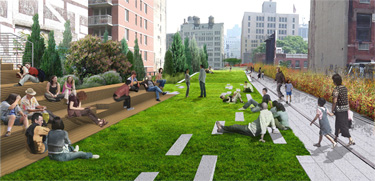 |
THE HIGH LINE
Public Park, New York,
USA 2009
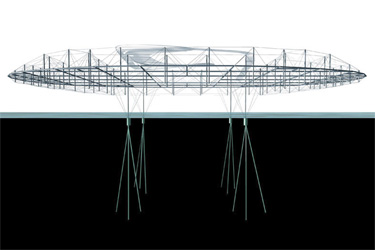 |
BLUR BUILDING Exposition Pavilion for Swiss Expo, Yverdon-les-Bains Switzerland 2002 |

5/30/2011
Императорские сады России

The 2011 “Italian Midday” Exhibition-Contest
26 May – 6 June 2011
Mikhailovsky Garden, St.Petersburg, Russia
26 May – 6 June 2011
Mikhailovsky Garden, St.Petersburg, Russia

St. Petersburg hosted the “Imperial Gardens of Russia” Festival for the fourth time. The three previous festivals have become the highlight events in the cultural life of the city and attracted the attention of St Petersburgers to the numerous traditional activities of the festival life. The Mikhailovsky Garden of the Russian Museum, the main venue of festival, has become not only the recreation spot but also the place where one could witness and partake in various creative actions.
2011 has been proclaimed the year of Italy in Russia. This fact has specified and determined the theme of the festival and that of the exhibition-contest: “Italian Midday”. The exhibition-contest of landscape design was dedicated to Italy, its culture and art, customs and traditions.

5/03/2011
Shigeru Ban + Hermès, Fuorisalone 2011
Il Padiglione disegnato da Shigeru Ban e Jean de Gastines ha un’area di 214 metri quadrati - alto 4,70 metri e lungo 26 metri - ed è realizzato con 800 elementi standard in legno di betulla e 600 tubi di cartone fissati tra loro da 6.000 tasselli sempre di legno, mentre un nastro di carta lungo 800 metri forma le pareti. Il padiglione, smontabile, era ospitato nella sala della Pelota, a Milano, dal 12 al 17 aprile 2011, per presentare la collezione di mobili per la casa di Hermès.


4/18/2011
Salone del mobile 2011, Premio miglior prodotto
Weaver, di Konstantin Grcic, per Vitra.
Cinghie, tessuto e struttura in tubolare d’acciaio rendono la poltrona leggera, comoda e facile da spostare. Guardando Weaver è immediata l’associazione con le attrezzature usate per il parapendio o il windsurf.
(Una curiosità: ma che significa quel grosso tombino del gas in mezzo al pavimento dello stand?)
(Una curiosità: ma che significa quel grosso tombino del gas in mezzo al pavimento dello stand?)

Salone del mobile 2011, Premio miglior installazione fuorisalone
Il premio per la migliore installazione del fuoriSalone 2011 è vinto da Mini con la seguente motivazione:
"L'installazione Mini Family getta l'automobile in aria uscendo, sia in senso materiale che figurato, dall'enorme massa di segni e prodotti che riempiono lo spazio di via Tortona. Lo sforzo tecnologico è risolto con eleganza con un riferimento indiretto al design navale. L'installazione mescola in modo appropriato gli elementi di eleganza, tecnologica e immaginario Pop che caratterizzano l'immagine della Mini".

Salone del mobile 2011, Premio miglior stand
Il premio per il miglior stand del Salone del mobile 2011 è vinto da Kartell con la seguente motivazione:
"Finalmente abbandonata la scatolona bianca, che è il marchio di riconoscimento dei mobilieri italiani, per realizzare una serie di installazioni libere nello spazio con grande effetto spettacolare. Di particolare interesse il riferimento alla Pop e Street culture americana, con l'uso dei neon, mescolato al riferimento Arte povera dei basamenti in legno grezzo. Interessante anche l'idea di un rapporto diretto con la dimensione e la struttura del padiglione fieristico".

4/16/2011
La casalinga di Voghera fa una proposta ad Abitare

Dopo aver visto l'omaggio a Zaha Hadid, faccio una proposta al direttore e alla redazione di "Abitare":
Amo le archistar e il loro indubbio talento, ma perché non vi occupate anche un po' di chi tira la carretta senza troppi grilli per la testa?
Perché non torniamo per un attimo al neorealismo, con tutti i ladri di biciclette che ci sono in giro?
E la casalinga di Voghera, che dice, che pensa, che fa? (non sarà che si è un po' rotta le scatole di tanto trionfalismo?)
Se posso permettermi, vorrei indicarvi la grande offerta al ribasso della collega arch. Daniela Fastoso, segnalata da Emanuele Jonathan Pilia del gruppo facebook Niba: "24 Euro invece di 500 per una consulenza dell'architetto Daniela Fastoso su come ripianificare la tua casa o il tuo ufficio".
Un'offerta che è ormai scaduta, con ben 27 operazioni, cioè consulenze architettoniche, andate a buon fine. Su questo link potete approfondire la sua offerta nel dettaglio.
(E mi auguro che l'arch. Fastoso non si offenda, non ho nessuna intenzione negativa, anzi, al contrario, ammiro la sua intraprendenza e sono lieto di farle pubblicità).
Penso che sarebbe una grande occasione di raccontare il mestiere, il mercato del lavoro e il mondo dell'edilizia così come è per la maggior parte degli architetti italiani.
E penso anche che "Abitare" sarebbe proprio la rivista più adatta, forse l'unica che saprebbe fare questo lavoro sul campo con l'intelligenza, il rispetto e la curiosità che occorrono per restituire in modo critico uno spaccato della professione oggi nel nostro paese.
Subscribe to:
Posts (Atom)